Most failures happen at handoffs: identity crossing domains, policy changing form, telemetry losing context, or ownership becoming ambiguous.
About
Deep systems work, made useful beyond the lab.
I work where network architecture, security, AI infrastructure, and operational consequence meet.
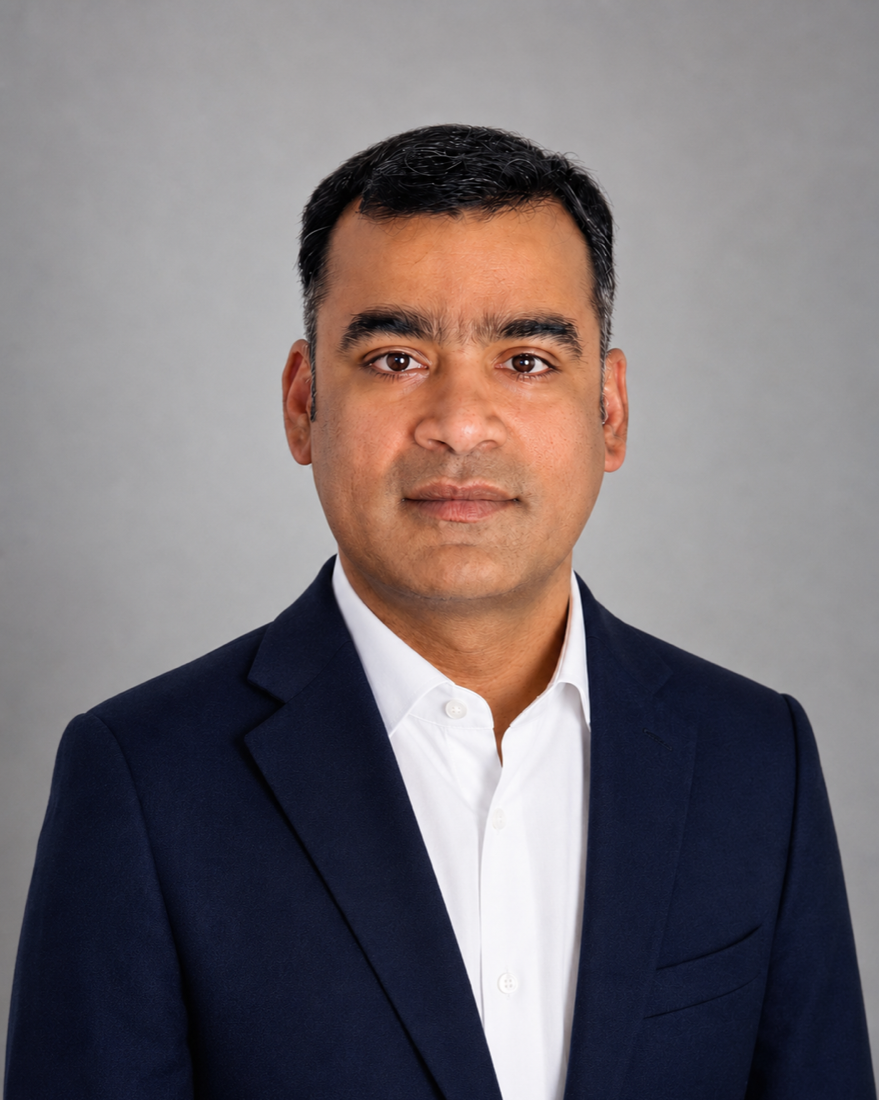
Triple CCIE / M.S. in Computer Networking, NC State University / Author and Cisco Live speaker
01 / The throughline
Understand the system. Test the assumptions. Share what holds up.
I began in enterprise and service-provider engineering, leading complex migrations and building tools, labs, and training programs that made delivery more repeatable. That hands-on foundation still shapes how I approach architecture: diagrams are hypotheses until the control plane, data plane, failure modes, and operating model have been exercised.
In Cisco IT Customer Zero, I helped bring intent-based networking into production and translated operational experience into product feedback and adoption guidance. The work sat between engineering, operations, product teams, and customers, where the value of a design depended on whether it could be explained, supported, and trusted.
Today, in Cisco Validated, I work across networking, security, cloud, data center, and AI infrastructure. My focus includes reference architectures, multi-domain policy, AI-ready infrastructure, and safer models for AI-assisted operations.
Across those chapters, the work has followed one pattern: understand the system deeply, test assumptions against reality, and make the resulting knowledge useful to others.
02 / Working principles
How I approach architecture
The goal is not novelty for its own sake. It is a system whose intent, evidence, boundaries, and tradeoffs remain legible under real operating pressure.
A fluent answer, healthy dashboard, or successful control-plane exchange does not prove that the expected outcome occurred.
A credible design names its stop states, partial states, recovery paths, and the evidence needed to tell them apart.
Common intent does not require identical infrastructure. It requires explicit semantics, translation, and enforcement.
Architecture becomes reusable when configuration, validation, troubleshooting, and ownership are understandable to practitioners.
Validated, deployed, partial, and planned are different states. Trust grows when those distinctions stay visible.
03 / Scope
A practitioner, architect, and technical educator
The work spans implementation depth and strategic translation, from packet paths and workload identities to product direction and executive discussion.
04 / Professional standing
Selected professional affiliations
Recognition and participation across engineering, research, and technical architecture communities, presented selectively so the affiliations support the work rather than compete with it.
Senior Member
A senior professional grade recognizing experience, maturity, and significant performance in engineering and technology.
Life Fellow
Approved in 2025 as a Life Fellow of the Institution of Electronics and Telecommunication Engineers.
Senior Fellow
Inducted in 2025 for technical architecture, engineering leadership, and commitment to secure-design principles.
Member MIET
Admitted in 2025 as a Member of the Institution of Engineering and Technology.
Associate Member
Elected in 2025 to the Scientific Research Honor Society through its qualifications and membership process.